
In this article
Share this post:
Platelet-rich plasma (PRP) hair restoration has become one of the most widely researched and requested non-surgical treatments for hair thinning and pattern baldness. Because PRP uses a patient’s own blood to stimulate hair follicles, many people view it as a more natural alternative to medications or surgery. However, the questions remain, “How does PRP work for hair loss?”
This article offers an overview of PRP hair treatment, including research findings, success rates, limitations, treatment timelines, and long-term expectations.
What Is PRP Hair Treatment?
Platelet-rich plasma is a concentrated portion of the patient’s blood containing a high number of platelets suspended in plasma. Platelets release growth factors, which are natural proteins involved in healing, cell signaling, and tissue regeneration.
Key Growth Factors in PRP
- Platelet-derived growth factor (PDGF)
- Vascular endothelial growth factor (VEGF)
- Epidermal growth factor (EGF)
- Insulin-like growth factor-1 (IGF-1)
- Transforming growth factor-β (TGF-β)
These growth factors may help improve hair growth by increasing blood supply to follicles, reducing inflammation, and prolonging the anagen (growth) phase of the hair cycle.
How PRP Hair Restoration Works: Step-by-Step
Although techniques vary slightly, most PRP treatments follow the same clinical process:
1. Blood Collection
A small amount of blood, typically around 10–30 mL, is drawn from the patient’s arm.
2. Centrifugation
The blood is spun in a centrifuge to separate its components. This process concentrates platelets into a small volume of plasma. Because no universal preparation standard exists, differences in spin speed, time, and equipment may influence results.
3. Optional Activation
Some clinicians activate PRP with calcium chloride or thrombin. Current evidence has not established whether activated PRP produces superior outcomes.
4. Injection Into the Scalp
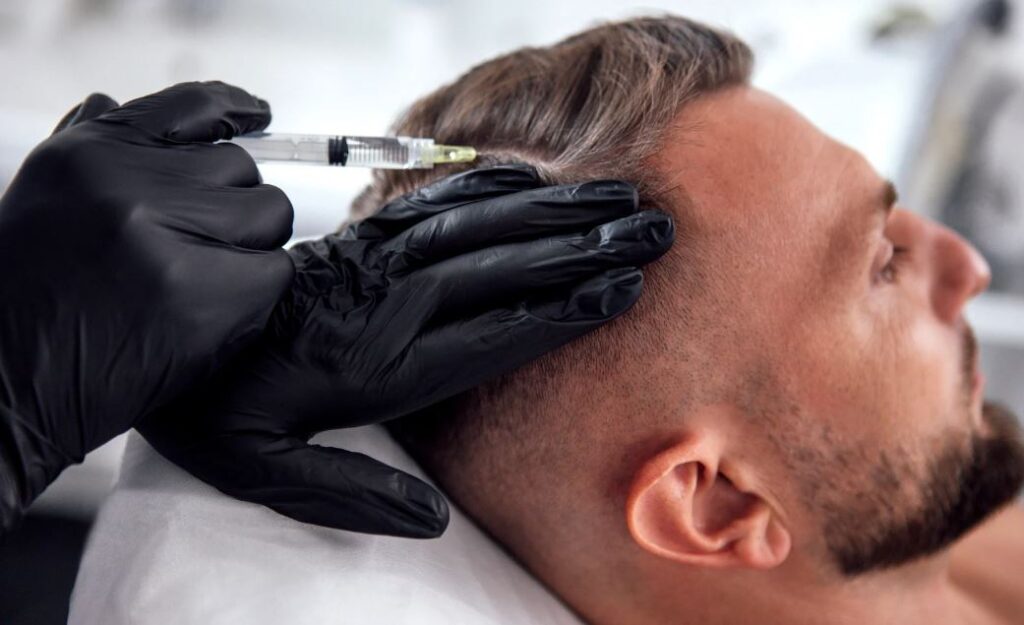
Using fine needles, PRP is injected into areas of thinning hair at intervals of roughly 1 cm. Treatment typically targets regions affected by androgenetic alopecia, such as the frontal scalp or crown.
5. Recovery
Most patients experience mild swelling, redness, or tenderness for 24–48 hours. No significant downtime is required.
Does PRP Work for Hair Loss? What Research Shows
Dozens of clinical studies have evaluated PRP for androgenetic alopecia.
A 2020 systematic review of 30 studies found significant improvement in hair density, hair-shaft thickness, and patient satisfaction when compared to placebo or baseline.
Another randomized controlled trial reported a 30% increase in hair count after three monthly PRP sessions.
Best Candidates
PRP appears most effective for individuals with:
- early to moderate androgenetic alopecia
- active but miniaturized follicles
- age under 60
- non-scarring hair loss
Limited Response Situations
PRP is unlikely to be effective for:
- completely bald areas
- scarring alopecia
- long-standing, advanced hair loss
- follicles that are no longer present
It’s best to keep in mind that PRP cannot create new hair follicles.
Is PRP Hair Restoration Permanent?
PRP is not a permanent cure for hair loss.
Because genetic and hormonal factors, particularly sensitivity to dihydrotestosterone (DHT), continue to influence hair follicles, results may gradually diminish without maintenance.
Timeline of Results
- initial improvement often begins at 3 months
- peak results commonly appear at 6–12 months
- benefits may fade after 12–18 months without continued treatment
Most specialists recommend maintenance sessions every 4–6 months.
Factors Affecting Longevity
Results depend on:
- age and genetics
- stage of hair loss
underlying medical conditions
smoking and lifestyle habits - treatment protocol consistency
- combination with other therapies
How Many PRP Sessions Are Needed?
Although protocols vary, the most widely used schedule includes 3–4 initial sessions, spaced 4–6 weeks apart. It is followed by ongoing maintenance every 4–6 months. Patients with more advanced thinning may require more frequent follow-ups.
PRP Success Rates
Reported success rates vary due to different preparation techniques and patient types. Published studies indicate:
- 60–90% of patients show measurable improvement
- hair density increases of 15–30%
- reduced shedding in most individuals
Outcomes are generally better when PRP is combined with standard medical therapy rather than used alone.
PRP for Alopecia Areata
Alopecia areata is an autoimmune condition that causes patchy hair loss. A small clinical study found that PRP produced greater hair regrowth than corticosteroid injections in mild cases. However, PRP is still considered experimental for alopecia areata, and corticosteroids remain first-line treatment.
How PRP Compares to Other Hair Loss Treatments
PRP differs from medications and surgical procedures in its mechanism and expected results. Unlike minoxidil, which enlarges follicles, or finasteride, which reduces DHT levels, PRP works by delivering growth factors directly into the scalp to support follicle activity. PRP may be a useful option for patients who want a non-drug-based treatment or who cannot tolerate medication side effects.
For individuals with advanced baldness or areas where follicles no longer exist, PRP cannot replace a hair transplant such as follicular unit extraction (FUE). However, many surgeons use PRP as a supportive therapy before or after transplantation to enhance graft survival and healing.
Acell and PRP: Current Evidence
Some clinics combine PRP with Acell®, a porcine-derived extracellular matrix material marketed to enhance tissue repair. Current evidence is limited to small, uncontrolled studies, and no major dermatology organizations endorse this combination for routine treatment. At this time, Acell with PRP should be viewed as investigational rather than standard care.
PRP Before and After: Realistic Expectations
Most patients notice gradual benefits, such as:
- improved hair thickness
- reduced shedding
- healthier-appearing scalp
- better overall coverage in thinning areas
PRP does not restore full density in advanced hair loss, reverse genetic balding permanently, or replace transplantation when follicles are absent. Setting realistic expectations and understanding gradual improvement is essential.
What to Avoid After PRP Hair Treatment
First 24–48 Hours
Avoid:
- washing the scalp for 12–24 hours
- intense exercise or sweating
- touching or scratching injection sites
- applying ice directly over the treated areas
First Week
Avoid:
- NSAIDs unless medically necessary, as they may interfere with platelet activity
- smoking and alcohol, which can impair healing
- sun exposure, saunas, and steam rooms
Patients should follow the specific instructions of their treating physician.
Side Effects, Risks, and Contraindications
Common Temporary Effects
- mild swelling
- redness
- bruising
- tenderness
These typically resolve within one to two days.
Rare Complications
- infection
- nerve irritation
- scar formation (extremely uncommon)
Who Should Avoid PRP
PRP may not be suitable for individuals with:
- active infections
- low platelet counts
- bleeding or clotting disorders
- uncontrolled diabetes
- pregnancy
- severe anemia
Because PRP uses autologous blood, allergic reactions are extremely rare.
Does PRP Hair Restoration Really Work and How Long Do Results Last?
PRP hair restoration is a scientifically supported, minimally invasive treatment that can improve hair thickness and slow the progression of androgenetic alopecia, particularly in early stages of hair thinning. Research shows that many patients experience meaningful improvement, especially when PRP is combined with standard therapies such as minoxidil, finasteride, or low-level laser therapy.
However, PRP is not a permanent cure for hair loss. Most individuals require maintenance treatments every 4–6 months to sustain results, and outcomes vary based on patient biology and the presence of functioning follicles. PRP is best suited for patients with realistic expectations who wish to enhance hair density without surgery, while those with advanced balding may require hair transplantation for optimal results.
Anyone considering PRP should consult a board-certified dermatologist or hair-restoration specialist to determine candidacy, identify underlying causes of shedding, and develop a personalized treatment plan.