Normal Non-Transplanted Hairline
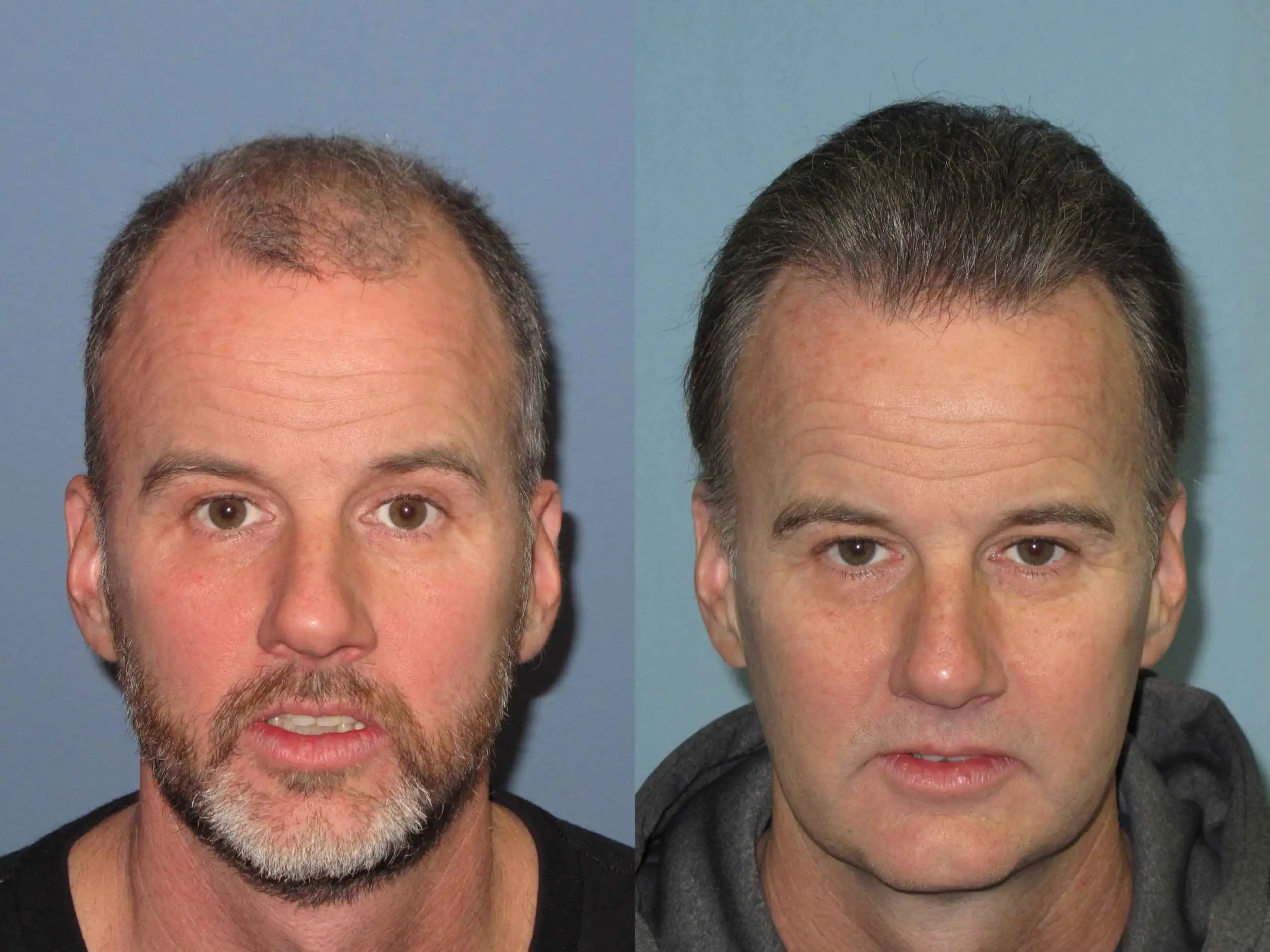
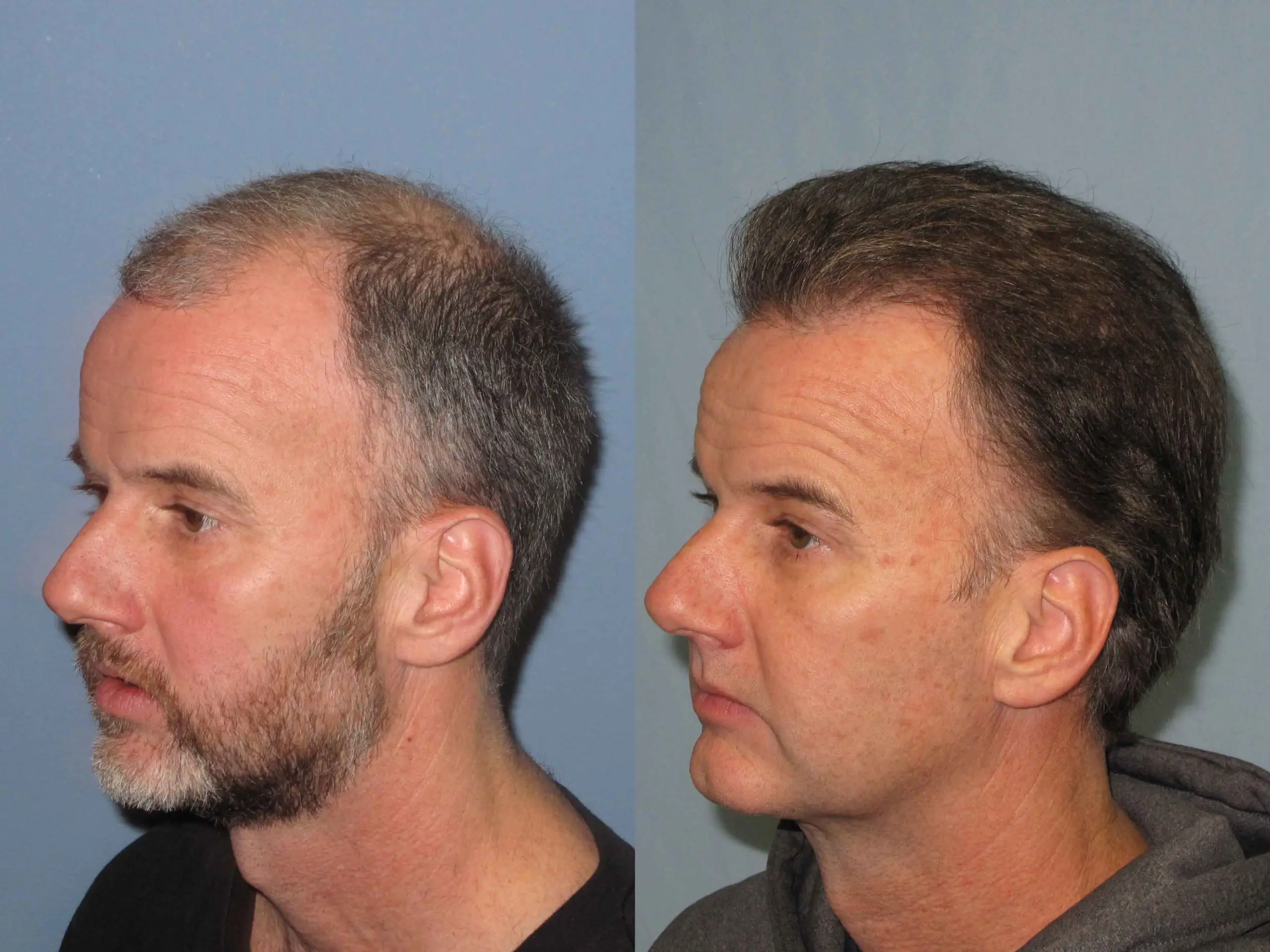
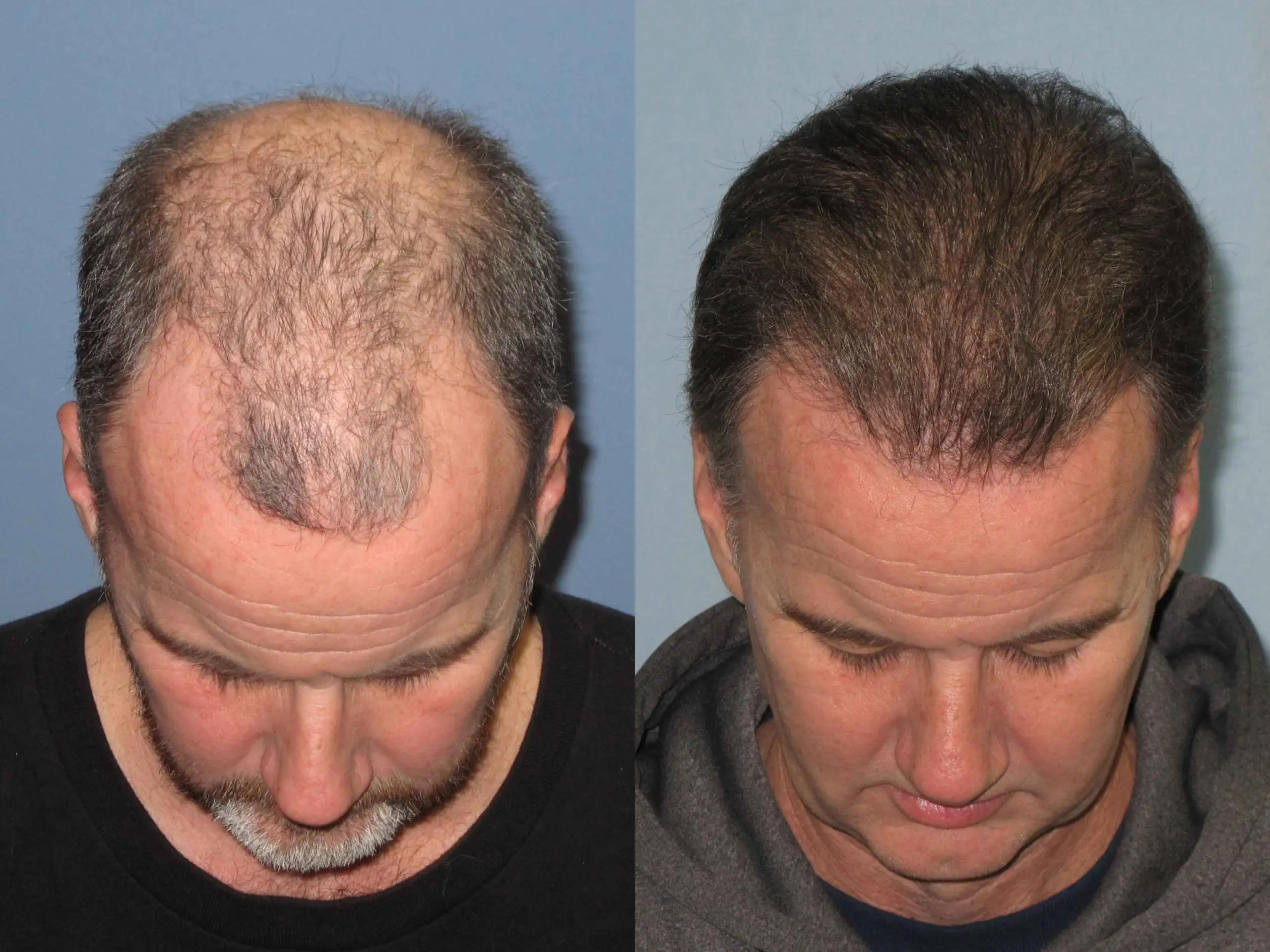
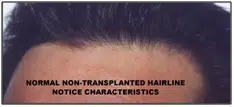 This is Dr. Shapiro’s own hairline which has not been transplanted so we know it is a normal hairline. Dr. Shapiro studied this and hundreds of other natural hairlines to understand recurrent characteristics that make a hairline look natural.
Micro-Regularity Along Anterior Boarder
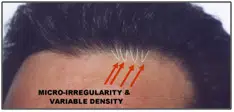 All hairlines have variable high alternating with low-density spots along the anterior border of the hairline. This is called Micro-Irregularity.
Macro-Irregularity and a Wavy Anterior Boarder
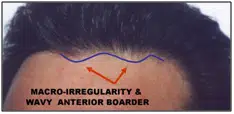 All hairlines have an undulating non- linear anterior boarder. This is called Macro -Irregularity. A straight line is abnormal and looks unnatural.
Soft, Ill Defined Transition Zone
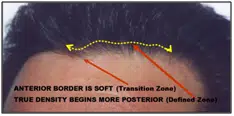 All hairlines start soft and build density gradually over a few millimeters to a centimeter A hairline that looks like A harsh wall is unnatural.
Follow the Natural Angel and Direction of Hair
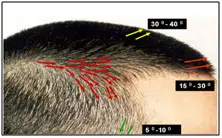 Hair changes direction and angle as it moves around the head. It is important to follow the natural angle and direction to create an undetectable look.
Illustration of Patters
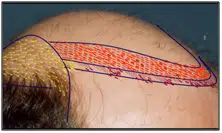 The temporal corners (yellow) have to be placed like a fan changing direction and angled around the corner. The transition zone should have micro and macro irregularity made up of 1 hair graft that leads to a soft wavy hairline. The area behind this should become more dense using larger 2 and 3 hair grafts (Red Zone).