
Scalp Micropigmentation (SMP) in Minneapolis
Scalp micropigmentation, or SMP, is a non-surgical hair loss treatment that uses fine pigment deposits to replicate the look of closely shaved hair follicles across the scalp. At Shapiro Medical Group we offer physician-led scalp micropigmentation in Minneapolis, treating patients at our Bloomington, MN office and serving the wider Minneapolis and Saint Paul metro area, greater Minnesota, and patients who travel to us from around the world.
SMP does not grow hair. It creates the appearance of density using pigment placed at a precise depth and in a pattern matched to your skin tone and your specific pattern of hair loss. We use it to create a shaved-head look, to add the illusion of density in thinning hair, and for scar camouflage after prior hair transplant surgery.
What makes our approach different is that your SMP is planned by ABHRS Diplomate hair restoration physicians who also perform FUE and FUT surgery. That means you can evaluate SMP, a hair transplant, or a combination of both in a single consultation, with physicians qualified to advise on all of them.
What Is Scalp Micropigmentation?
Scalp micropigmentation is a medical tattoo procedure, which is why patients often search for it as a hair tattoo. A specialist uses a microneedle to deposit pigment into the upper layers of the scalp, with each impression sized to mimic a single shaved hair follicle. Placed correctly and in the right pattern, those impressions read as stubble and create the look of a full head of closely cropped hair.
While it shares a basic principle with traditional tattooing, SMP differs in ways that matter. The pigments and machines we use are designed specifically for the scalp, to control pigment depth, limit color change, and prevent migration. The impressions are comparable in diameter to a single follicular unit, which is far finer than conventional tattoo work.
We use SMP for three main purposes:
- A shaved look. Creating the appearance of closely cropped hair with visible stubble across areas of full or near-full hair loss.
- SMP for thinning hair. Reducing the color contrast between the scalp and existing hair so thinning areas look fuller. The effect is similar to a cosmetic concealer such as DermMatch or Toppik, with the advantage that it does not need to be reapplied daily. This is often valuable for transplant patients who want more density than surgery alone provided, and SMP for women with diffuse thinning is one of the fastest-growing reasons patients come to us.
- SMP scar camouflage. Concealing linear scars from strip (FUT) surgery and dot scarring from FUE surgery. Scalp micropigmentation for hair transplant scars is one of the most reliable applications of the technique.
It is worth being direct about what SMP is not. It is not a hair transplant, and it will not stimulate growth. It is a cosmetic result created entirely by pigment.
Temporary and Permanent SMP: Why the Difference Matters
If you research SMP online you will find clinics offering “permanent” and “temporary” techniques. The distinction has real consequences, and most patients are never told about it.
Permanent SMP is what most clinics mean when they use the term. Methodology varies, but the common thread is pigment intended to last roughly two to five years. It may never fade completely, and full removal requires a laser.
Temporary SMP, also called Scalp Tricho-Pigmentation or STP, is a specific technique developed by Milena Lardi of Beauty Medical in Milan, Italy. It uses sophisticated pigments engineered to break down and fade completely within six to twenty-four months. The needle type and size, the ink impressions, and the depth of delivery all differ from permanent technique.
Shapiro Medical Group is one of the few practices globally, and possibly the only one, extensively trained in both techniques. We think that matters, because each has genuine advantages and the right choice depends on your situation rather than on which method a clinic happens to offer.
Our SMG physicians work alongside our SMP specialist, Nicole, to design a plan around your current needs and your likely future ones.
Who Is a Good Candidate for SMP in Minneapolis?
SMP suits a wide range of hair loss presentations, including Norwood stages 2 through 7 in men, diffuse thinning in women, and visible scarring from previous FUE or FUT surgery. The patients who do best are the ones who understand going in that SMP is a cosmetic result rather than hair growth.
Candidacy depends on your scalp condition, skin type, stage of hair loss, and any prior surgical history. Those same factors determine whether SMP alone is the right approach or whether it should be combined with a transplant. Patients with active scalp conditions or certain skin sensitivities may not be good candidates.
Because we perform both SMP and hair restoration surgery, your consultation is not a sales conversation about one procedure. We evaluate your hair loss and your goals, then tell you whether SMP, a transplant, or a combination will get you closest to what you want.
Physician-Led SMP at Shapiro Medical Group
Shapiro Medical Group has specialized in hair restoration for more than 30 years. Our SMP is planned and overseen by ABHRS Diplomate hair restoration physicians rather than delivered by technicians working independently of any medical evaluation, which is how most standalone SMP studios operate.
Dr. Ron Shapiro, our Medical Director, co-authored the medical textbook Hair Transplantation, referred to by physicians worldwide as the “bible” of the field. In 2005 he received the Golden Follicle Award from the International Society of Hair Restoration Surgery for outstanding contribution to the advancement of hair transplantation surgery. In 1997 he became one of the first physicians in the United States to be named a Diplomate of the American Board of Hair Restoration Surgery, and was chosen the same year to serve on the ISHRS Board of Governors. He is on staff at the University of Minnesota Department of Dermatology.
Dr. Ron Shapiro, Dr. Paul Shapiro, and Dr. David Josephitis are all ABHRS diplomates and ISHRS members. Our physicians have lectured and demonstrated advanced techniques at more than 100 conferences worldwide.
Two things about how we work say more than any credential. We schedule only one procedure per day, so you get the attention the work requires. And other physicians come to Shapiro Medical Group not only to learn our techniques, but to have the procedure performed on themselves.
That clinical background shapes the SMP itself: hairline design, pigment placement, and pattern selection appropriate to your degree of hair loss.
What to Expect During SMP Treatment
Sessions. SMP takes a minimum of three sessions, and complex cases can require three to five. There is a reason for that pacing. Depositing pigment too aggressively too quickly causes the impressions to bleed together and read as a solid blob rather than individual micro-dots. Spacing the sessions and allowing healing time between them is what produces a natural result. Think of it as layering filters to build a gradually darker, more convincing effect.
Timing. Your first two sessions are on consecutive days. The third, which we call the finishing procedure, is scheduled roughly six weeks after your initial appointment, and can be up to six months later. Some patients need another one or two sessions after that, depending on how dark they want the result and how their pigment fades.
Appointment length. Plan for a full day. All appointments, including touch-ups, run six to eight hours.
- Day 1 (6 to 8 hours): We lay your base. The contrast between areas of full density and areas of hair loss is neutralized, and a light application of impressions is applied to prepare the scalp for what follows.
- Day 2 (approximately 8 hours): Held the day after your first appointment. We work between the existing impressions to darken the hue and add definition, then address the hairline and any scar camouflage.
- Day 3, the finishing procedure: We expect the pigment to fade 30 to 50 percent between the end of Day 2 and this session. Any fading or areas of pigment rejection are addressed, and final detail is added to your density, hairline, and scars.
Recovery. You could technically return to work the day after a session. Redness and swelling subside around days three to five. If we treated a scar, expect that to take a little longer, roughly ten to fourteen days.
How long it lasts. This depends entirely on which technique you choose. Temporary SMP commonly lasts one to two years with proper care, and we recommend coming in for a touch-up each year. The pigment is designed to fade completely over twenty-four months, which is deliberate: our pigments contain no black, because black pigment eventually fades toward blue or green and produces an unnatural result. Permanent pigment is intended to last two to five years and may never clear fully without laser removal.
One advantage of the temporary approach is that it is reversible. If you want to redesign the result or stop altogether, the pigment disappears on its own within six to twenty-four months, and a laser can accelerate that if you prefer.
SMP Cost in Minneapolis
SMP pricing depends on the size of the treatment area, the number of sessions your case requires, the technique you choose, and complexity factors such as scar concealment or a prior transplant history. Because every scalp, hair loss pattern, and goal is different, we do not publish quotes online. We provide an exact price at your consultation, and price estimates are good for three months from the date of the consultation.
As a cosmetic procedure, SMP is typically not covered by health insurance. Financing is available through several institutions for patients who qualify.
Before & After Gallery
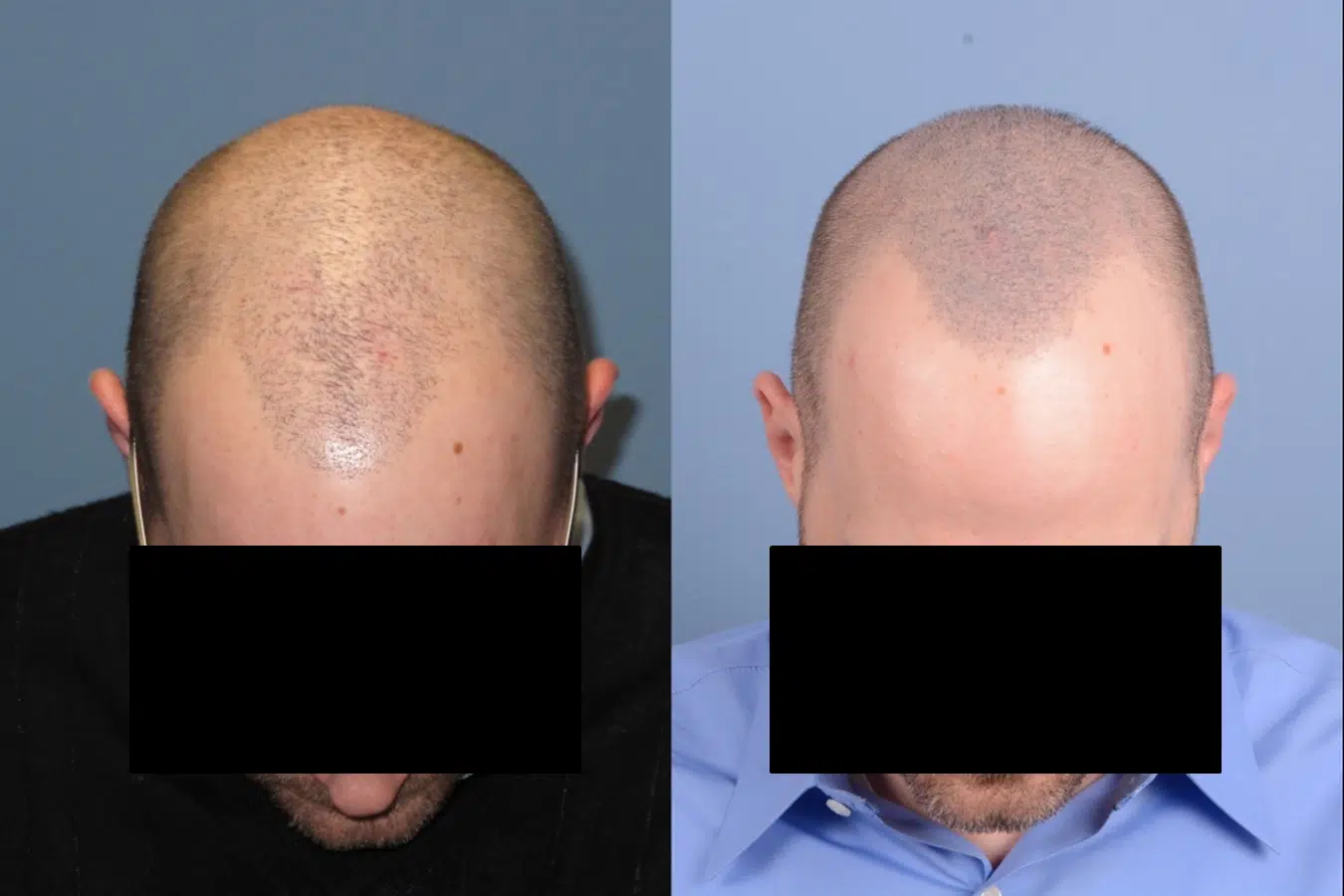
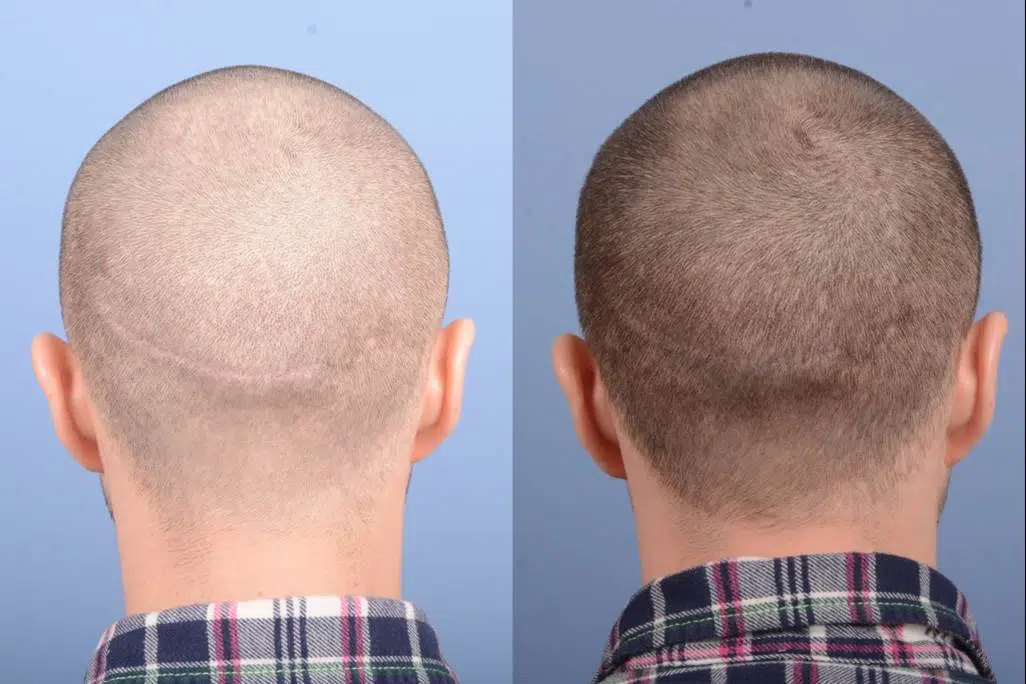
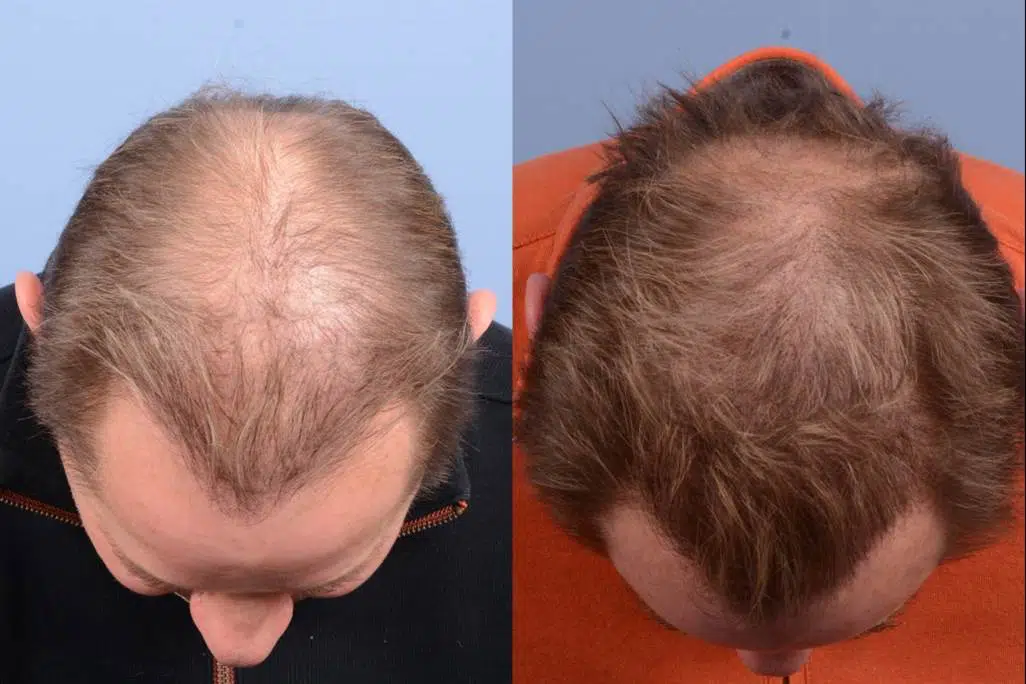
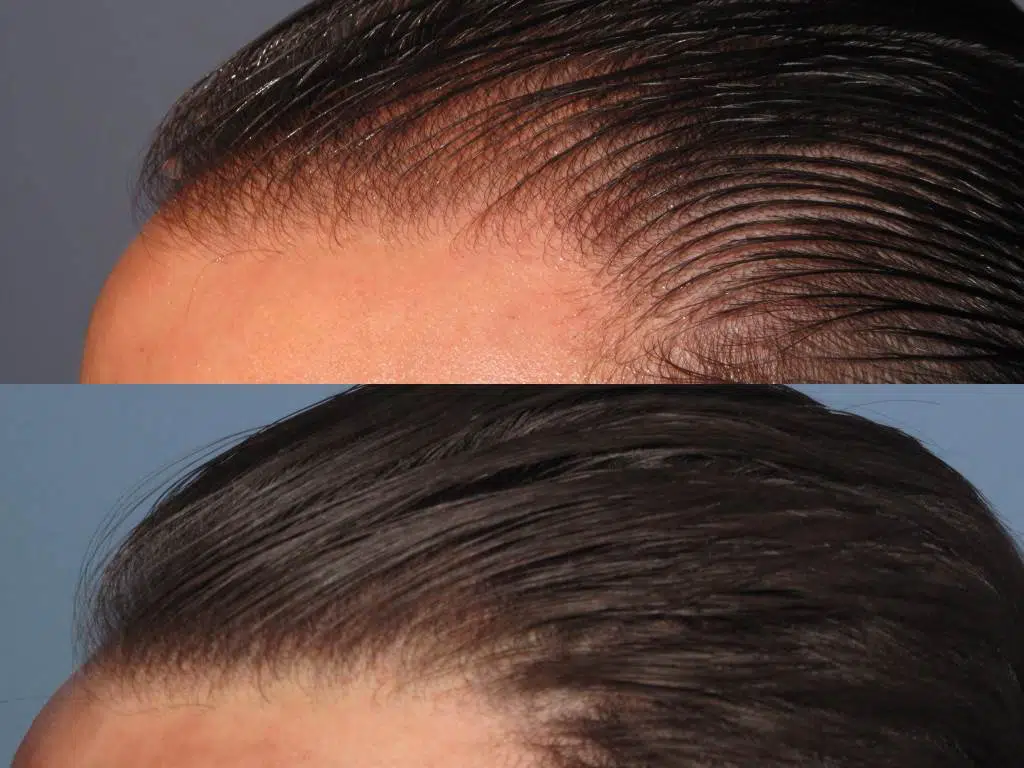
Patient photos published with written consent. Individual results may vary.
Frequently asked questions
What is scalp micropigmentation?
Scalp micropigmentation is a cosmetic procedure that uses pigment deposits to replicate the appearance of shaved hair follicles on the scalp. It does not grow hair. It creates the visual effect of density, or a shaved-head look, through pigmentation alone.
How long does SMP last?
That depends on the technique. Temporary SMP commonly lasts one to two years with proper care, and we recommend an annual touch-up. It is designed to fade completely within six to twenty-four months. Permanent SMP is intended to last two to five years and may never fade completely without laser removal. We are trained in both and will help you decide which suits your situation.
How many SMP sessions are needed?
A minimum of three. The first two are on consecutive days, and the finishing procedure follows roughly six weeks later. Some patients need three to five sessions in total, particularly if they want a darker result or need extensive scar work. Creating a shaved look generally takes fewer visits than building density in thinning hair.
How long is each SMP appointment?
Six to eight hours, including touch-up visits. It is a full-day commitment, so plan accordingly.
Will my SMP fade?
Yes, and with the temporary technique that is by design. The pigment particles are small enough for your immune system to break down and eliminate over about twenty-four months. We expect 30 to 50 percent fading between your second session and your finishing procedure. Because scalp dermal thickness varies, fading is not perfectly even, which is exactly what the finishing session addresses.
Is SMP reversible?
With the temporary technique, yes. If you want to redesign the result or stop the process, the pigment disappears naturally within six to twenty-four months. A laser can remove it sooner if you prefer. This is one of the main advantages of temporary pigment over permanent.
Does SMP look natural?
Yes, when the pattern and pigment shade suit your skin tone and the impressions are placed at the correct depth and spacing. Our physicians oversee hairline design and density pattern so the result is anatomically appropriate for your degree of hair loss. Our pigments also contain no black, which prevents the blue or green cast that shows up as permanent pigment ages.
Can SMP cover hair transplant scars?
Yes. SMP is commonly used to camouflage linear scars from strip surgery and dot scarring from FUE. Because we perform both SMP and hair transplant surgery, we can evaluate scar concealment and surgical repair options together in one consultation.
How soon can I return to work after SMP?
Technically the next day. Redness and swelling subside around days three to five. If we treat a scar, expect roughly ten to fourteen days.
Who is not a candidate for SMP?
Patients with active scalp conditions, certain skin sensitivities, or expectations that SMP will grow hair are generally not good candidates. Candidacy is determined individually at consultation.
Start Your Scalp Micropigmentation Consultation in Minneapolis
You do not have to decide between SMP and surgery before you walk in. We evaluate your hair loss, explain what each option can realistically do for your pattern and stage, and build a plan around your goals. If that plan is SMP, the physicians who designed it oversee the work.
Ready to find out if scalp micropigmentation is right for you? Book a consultation at our Bloomington, MN clinic and talk through your options with the physicians who will plan your treatment.
Not sure whether SMP or surgery fits your situation?