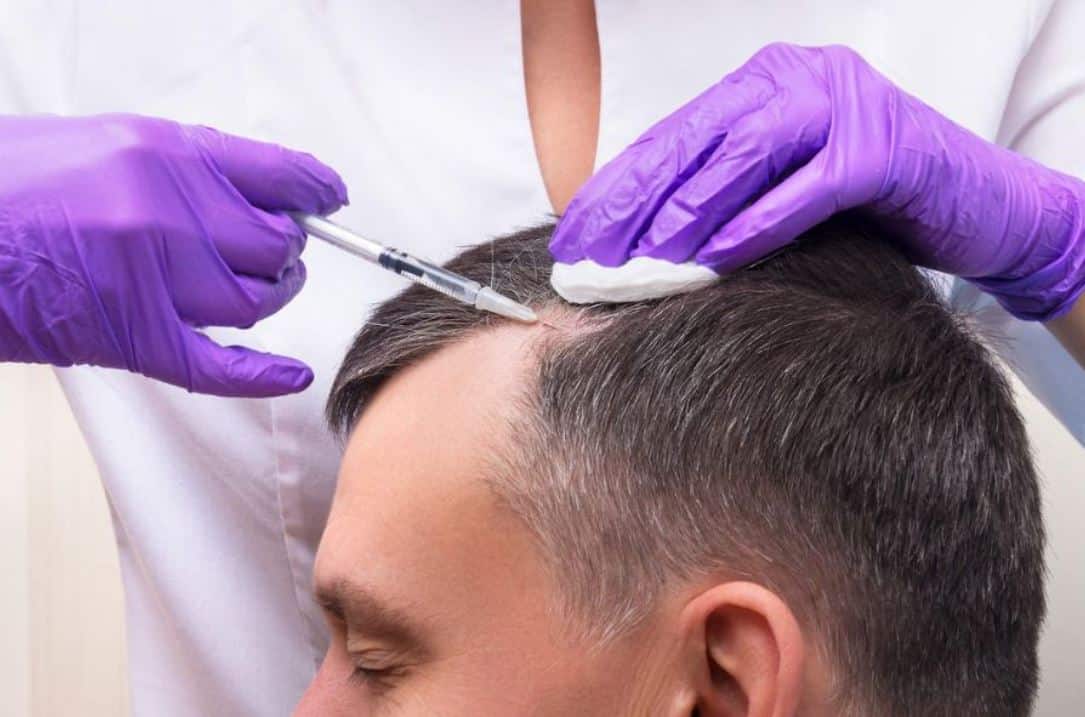
Advancements in hair restoration have made it possible to restore a full head of hair. Patients can now choose from a wide range of surgical and nonsurgical solutions depending on their needs and preferences. One such advancement is the use of ACell and PRP as a stand-alone treatment or in combination with hair transplant procedures. If you’re not ready for a hair transplant, Acell + PRP for hair loss can be an excellent nonsurgical option.
What is ACell + PRP Therapy?
ACell is a regenerative medicine that promotes tissue growth at the cellular level. It contains a protein complex called extracellular matrix (ECM) that aids in healing and tissue regeneration.
On the other hand, platelet-rich plasma (PRP) is a non-surgical hair restoration solution that involves the extraction and concentration of platelets from the patient’s own blood. These platelets are rich in growth factors and proteins that stimulate dormant hair follicles and promote hair regrowth.
Can ACell + PRP Be Used as a Stand-Alone Treatment?
Dr. Shapiro and his team can administer ACell + PRP Therapy to patients as a stand-alone treatment. Both ACell and PRP have been clinically proven to help manage, stop, or even regrow hair.
You are a good candidate for ACell + PRP if:
- you want to control your hair loss
- you want to treat diffuse hair thinning
- you’re looking for a nonsurgical option to restore hair
- you don’t have enough donor hair supply therefore, unqualified for a hair transplant
However, it’s important to manage your expectations. Results can vary from patient to patient and nonsurgical hair restoration options like ACell and PRP can’t restore hair for patients with severe hair loss.
Combining Hair Transplant with ACell + PRP
When combined, ACell and PRP work together to enhance the results of a hair transplant. ACell acts as a scaffold, providing structural support and stimulating the body’s natural healing response. It attracts stem cells and growth factors, which aid in the regeneration of damaged tissue and the formation of new blood vessels.
PRP, on the other hand, delivers a concentrated dose of growth factors directly to the hair follicles, nourishing them and promoting their growth. The growth factors in PRP stimulate the miniaturized hair follicles to transition into an active growth phase, resulting in thicker, healthier hair.
ACell + PRP Therapy Minneapolis, Minnesota
If you’re considering hair transplant surgery and want to achieve optimal results or simply looking for a nonsurgical option to restore your hair, ACell + PRP can help.
Dr. Shapiro and his team will conduct a full evaluation of your hair loss and recommend a comprehensive hair transplant plan that’s aligned with your needs and aesthetic goals.
Call us to schedule a consultation at Shapiro Medical Group today. We serve patients all over Minneapolis and surrounding areas including Golden Valley, Columbia Heights, Roseville, Richfield, and the greater Minnesota area.