

Hair Transplant Technology Advances: A 70-Year Clinical Timeline
From crude 4mm plugs in 1952 to AI-guided robotic precision in 2026, hair transplant technology advances have transformed restoration into a sophisticated medical discipline. This clinical timeline examines every major era in the field’s 70-year evolution—what changed, why it mattered, and what each breakthrough left unsolved. Essential reading for anyone evaluating today’s hair restoration options.

Temple Hair Restoration Transplant: The Precision Window Guide
Temple hair restoration transplant is a precision discipline with unique timing rules, surgical demands, and long-term risks distinct from general hairline procedures. Patients at Norwood Stage 2–3 occupy the optimal intervention window, where graft efficiency and aesthetic stability align most favorably. This guide breaks down everything you need to know to approach temple restoration with confidence and clarity.

Hair Loss Medication Options: The 2026 Complete Clinical Guide
The 2026 hair loss treatment landscape has evolved dramatically, with new JAK inhibitors, combination protocols, and pipeline breakthroughs joining established options like minoxidil and finasteride. This clinical guide covers every hair loss medication option by mechanism, patient profile, and treatment stage. Whether you’re addressing early thinning or advanced loss, get the expert framework you need to choose the right therapy.

Hair Restoration Industry Trends 2026: The Convergence Report
The hair restoration industry in 2026 has reached a genuine inflection point, with AI, robotic surgery, regenerative pharmacology, and shifting patient demographics converging simultaneously. From the female patient surge to FDA crackdowns on fraudulent exosome clinics, the $8.19 billion market is being reshaped at every level. This report cuts through the hype with evidence-based clinical analysis for patients, prospective patients, and referring physicians.

Crown Hair Loss Transplant: The 4-Stage Strategic Framework
Crown hair loss transplant is widely considered the most technically complex area of scalp restoration, consuming up to 4,000 grafts yet still risking sparse results without the right strategy. This clinician-validated 4-stage framework covers Stabilization, Candidacy Assessment, Surgical Execution, and Long-Term Management. Discover what separates successful vertex restoration from disappointing outcomes.

Natural Hair Growth Stimulation Therapy: The 2026 Biological Mechanism Guide
Natural hair growth stimulation therapy is reshaping how we treat hair loss—moving beyond side-effect-laden pharmaceuticals to biologically grounded solutions. This 2026 guide breaks down the exact cellular mechanisms behind PRP, exosomes, low-level laser therapy, and emerging stem cell activators. Learn what the current evidence supports and how a specialist-led plan differs from generic clinic protocols.

What Makes a Great Hair Transplant Surgeon: The 7-Standard Framework
Any licensed physician can legally perform hair transplant surgery in the US—no specialized credentials required. This 7-standard framework gives you measurable, outcome-driven criteria to identify truly elite surgeons and protect yourself from costly, irreversible mistakes.
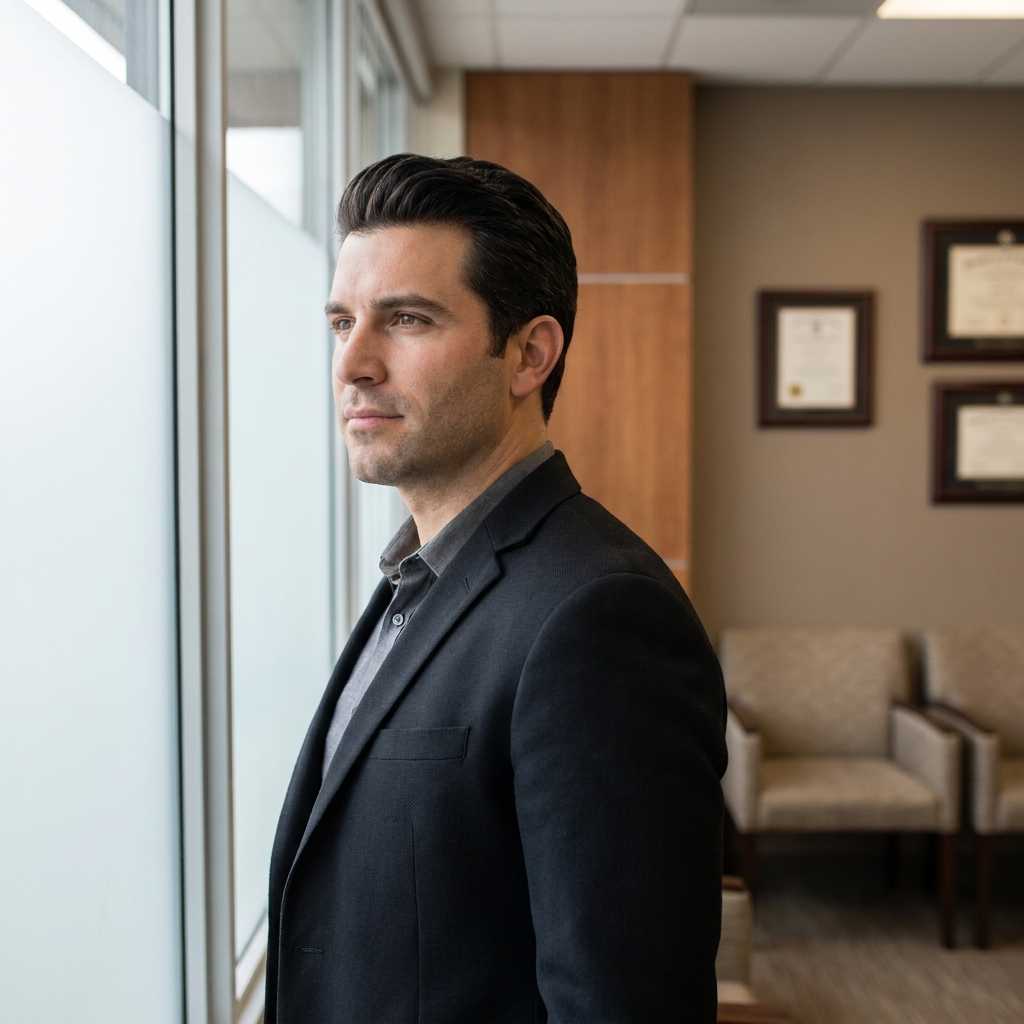
Hair Transplant for Receding Hairline: The Surgeon’s Candidacy Guide
A hair transplant for a receding hairline is a strategically distinct procedure with its own candidacy criteria and long-term consequences. This surgeon’s guide covers the critical factors most clinics won’t discuss openly—including donor budget trade-offs and the island hairline effect. Learn what questions to ask before committing to surgery.
Platelet Rich Plasma Hair Loss Treatment: The Activated vs. Non-Activated Decision That Changes Everything
Not all platelet rich plasma hair loss treatments are created equal—the activated vs. non-activated distinction is the critical factor most clinics never explain. A landmark meta-analysis of 43 randomized controlled trials confirms these two forms of PRP produce measurably different results. This comprehensive guide helps you understand exactly what PRP is, who it works for, and how to make an informed treatment decision.

Hair Transplant for Eyebrows: The Surgical Precision Guide for 2026
Eyebrow transplantation is one of the most technically demanding procedures in hair restoration — and one of the fastest-growing. This 2026 guide breaks down surgical techniques, ideal candidacy, and what realistic outcomes actually look like so you can make a fully informed decision.

Hair Restoration Confidence Transformation: What the Data and Real Patients Show
Hair loss affects millions, but the psychological impact goes far deeper than appearance. Explore what peer-reviewed research and real patients reveal about hair restoration confidence transformation—including measurable gains in self-esteem and quality of life that are changing how experts view the procedure.

SMP for Thinning Hair: The Density Solution Most Clinics Miss
Most clinics tell thinning hair patients that scalp micropigmentation isn’t for them — and that’s simply wrong. Density SMP is a specialized technique that places pigment dots between existing follicles to dramatically reduce scalp visibility. Learn who qualifies, how it works, and why it may be the confidence-restoring solution you’ve been missing.