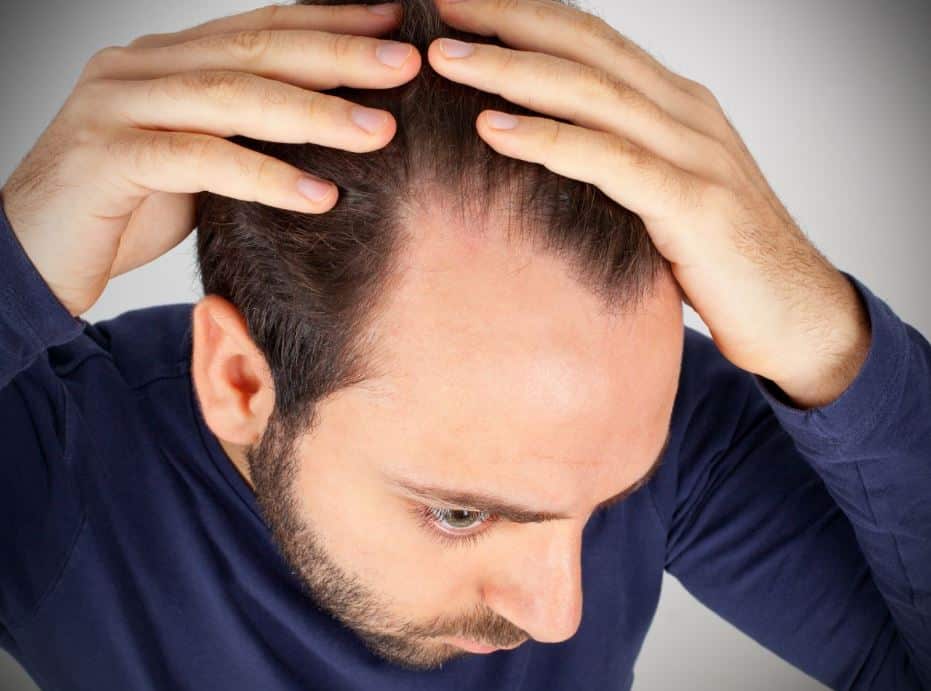
If you have been noticing your hairline receding lately, you’re not alone. The American Hair Loss Association estimates that 85% of men will experience some degree of hair loss by the age of 50. And it’s not just men – women can also suffer from a receding hairline with an estimated 40% experiencing some hair loss by age 50. We know how frustrating it can be to see your hairline slowly moving back, but luckily, you can restore your hairline and bring back your confidence with a hairline restoration surgery at Shapiro Medical.
What Causes the Hairline to Recede?
Your hairline may recede for several reasons, including genetics, hormonal changes, stress, and certain medications. Men are more likely to experience hairline recession as a sign of pattern baldness (androgenic alopecia). Women may also experience hairline recession due to hormonal changes, such as during menopause, or as a result of certain medical conditions. Regardless of the cause of your receding hairline, bringing them back can certainly boost your self-esteem.
Hairline Restoration Options
While there are many hair restoration solutions you can choose from, only hair transplantation offers permanent and natural-looking results. At Shapiro Medical, we offer two main types of hairline restoration surgery – follicular unit extraction (FUE) and follicular unit transplantation (FUT).
FUE involves removing individual hair follicles from the back and sides of the scalp, where the hair is permanent, and transplanting them into the recipient area, where the hairline has receded. The advantage of FUE is that it leaves minimal scarring and has a faster recovery time compared to FUT.
On the other hand, FUT involves removing a strip of skin from the back of the scalp, from which individual hair grafts are then extracted and transplanted into the recipient area. The advantage of FUT is that it can provide a higher yield of hair follicles, making it a good option for people with advanced hair loss.
Schedule a Consultation Today.
We understand the emotional impact that hair loss can have on your life. That’s why we offer a range of hair restoration procedures, including hairline restoration surgery, to help you regain your confidence and feel good about yourself again.
Call us to schedule a consultation at Shapiro Medical Group. We serve patients in Minneapolis and surrounding areas including Golden Valley, Columbia Heights, Roseville, Richfield, and the greater Minnesota area.